When eating less, it is easy to focus on what to remove and overlook what meals still need to provide. Protein deserves attention during weight management, especially when reduced appetite makes regular meals difficult. The evidence supports taking adequacy seriously; it does not support one high-protein target for every body and every health condition.
What the trials show—and what they do not
In a short controlled feeding trial involving 39 adults, diets with more protein during a substantial energy deficit reduced the proportion of weight loss coming from fat-free mass compared with the lower-protein diet. The experiment lasted weeks and used a tightly controlled setting. It was not a demonstration that its prescribed intake is the correct lifelong target for all adults. Protein feeding trial.
A different randomized trial in older adults found no significant advantage in preserving lean mass, strength, or physical performance from the higher-protein diet tested over 12 weeks. That does not make protein irrelevant. It shows why results depend on the population and intervention, and why a promise that more protein will prevent all muscle loss is too strong. Older-adult protein trial.
What ordinary portions contribute
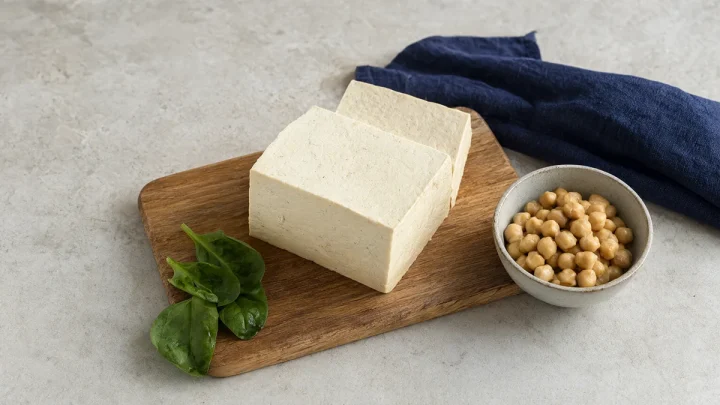
Start with a food you enjoy and can afford. Eggs, lentils, tofu, chicken, fish, milk, and yogurt offer different ways to include protein. A portion’s weight is different from the grams of protein it contains: 100 g of food is not 100 g of protein. The table gives examples to help you read a meal or food label; it does not set how much you should eat.
| Food and preparation | Example portion | Protein |
|---|---|---|
| Hard-boiled egg | 1 large egg, 50 g edible portion | About 6 g |
| Lentils, boiled without salt | ½ cup, about 99 g cooked | About 9 g |
| Chicken breast, roasted, meat only | 85 g cooked, about 3 oz | About 26 g |
| Firm tofu prepared with calcium sulfate | 100 g, using this specific reference food | About 17 g |
Values are rounded from the downloadable USDA FoodData Central SR Legacy records 173424, 172421, 171477, and 172475. Brands, water content, and preparation change the result, particularly for tofu. These are reference foods rather than laboratory measurements of your meal. For packaged food, compare the label’s protein with the amount you actually use, and keep cooked and uncooked weights separate.
A worked lunch example
Imagine a lentil bowl with vegetables, a grain you enjoy, and two large hard-boiled eggs. The lentils contribute about 9 g in the illustrated half-cup portion; the two eggs contribute about 13 g. Together those two ingredients provide approximately 22 g of protein. That subtotal comes from the unrounded USDA values; other ingredients can contribute more. It is a calculation example, not a recommendation that lunch must contain 22 g or that this is a complete day’s intake.
To see the calculation, multiply protein per 100 g by the portion weight divided by 100: lentils 9.02 × 99/100 = 8.93 g; eggs 12.6 × 100/100 = 12.6 g. Add them: 21.53 g, rounded to 22 g. If your portion changes, the subtotal changes. A similar bowl made with tofu needs the values for the tofu you buy, rather than an assumption that every replacement has the same protein.
Keep the rest of the meal in view: its variety, energy, taste, cost, and whether you can comfortably eat it. Our weight-management planning guide shows how to arrange an ordinary meal and a backup for busy days. A useful plan is one you can repeat and adapt.
Lower appetite needs attention beyond a protein number
A multisociety advisory on GLP-1 treatment highlights nutritional adequacy, muscle function, and resistance activity as parts of supportive care. It is an expert synthesis, and some recommendations rely on indirect evidence rather than trials of a specific eating pattern during medication use. Nutrition advisory. Persistent difficulty eating deserves a conversation with the care team rather than an attempt to fix everything with one nutrient.
Food variety still matters. WHO guidance favors a range of nutritious foods, including fruits, vegetables, pulses, whole grains, and appropriate protein sources. WHO healthy-diet guidance. A plan that hits a protein number while making other food choices impossible is not automatically a balanced plan.
Distinguish amount, measurement, and function
Three questions often become one claim: how much protein someone eats, what a body-composition test estimates, and what the person can do. They are connected, but they are not interchangeable. A body-composition result alone does not establish that a person has become weaker, and a food log alone does not establish that every need is met.
Fat-free or lean mass includes more than skeletal muscle. Hydration and the measurement method affect how such results should be interpreted. A short-term body-weight study illustrates the importance of non-fat components in observed changes. Body-weight study. Avoid turning every reported kilogram of lean-mass change into a kilogram of working muscle lost.
Read a protein headline with the full intervention
A trial’s result depends on more than the protein number. The participants, energy restriction, duration, activity, and way outcomes were measured belong in the description. A short feeding experiment and a 12-week controlled-diet study in older adults do not ask exactly the same question. Conflicting results can identify those differences rather than justify choosing whichever finding sells a product.
The two trials discussed above support a cautious conclusion: adequacy matters, and an automatic promise that a higher intake preserves all lean mass is too broad. Neither study establishes the optimal pattern for every person taking a GLP-1-based medicine. The nutrition advisory draws on a broader evidence base and should be described as an advisory, rather than as that missing direct trial.
Turn the example into a shopping decision
Pick one meal that regularly causes difficulty. Write down its usual protein-containing food, the portion you tend to use, and the obstacle. A breakfast you cannot prepare on a workday needs a different solution from a dinner that has become difficult because of nausea or low appetite. A number on a food label cannot solve either obstacle by itself.
For a packaged food, check whether the listed serving matches your meal. If a label lists 12 g per serving and you use half that serving, it contributes about 6 g. This is illustrative arithmetic using a hypothetical label, not a claim about a particular product. You need not weigh every meal indefinitely to understand the difference between food weight, serving size, and protein content.
Pair the food review with your strength and activity plan. A dietitian can assess overall intake, while an activity professional can help with suitable resistance exercises. Neither a high-protein label nor a training log alone establishes that all nutrition or medical needs are met.
When a supplement has a specific job
A supplement may be discussed to address an identified practical or nutritional problem. The useful questions are: what gap is it intended to fill, what amount is appropriate, what other ingredients are present, and how will you know it helped? An expensive product or an athletic package does not answer those questions.
Record the reason for considering it. “I need an option my dietitian recommends when I cannot manage the planned meal” is more specific than “This product protects muscle.” The first can be evaluated within care; the second requires evidence for the exact product and outcome. This article does not select a supplement or imply that one is routinely required.
Bring food intake and function to the same review
Describe changes in what you can eat and what you can do. Has appetite made meals difficult? Has the food pattern narrowed? Does everyday activity feel different? These observations do not diagnose a cause, but they help the appropriate professional decide what to assess.
A review should be individualized when age, chronic disease, medical dietary restrictions, or treatment-related symptoms matter. Keep the target, reason, and follow-up together. The strongest practical conclusion is to solve a verified problem while protecting overall adequacy, rather than treating “more protein” as an answer to every change during weight loss.
Questions for a dietitian
- What intake makes sense for my age, body size, activity, and medical history?
- Does my current food pattern meet that target without crowding out other needs?
- How should we monitor strength, function, and overall intake?
- Would a supplement solve a specific problem, or would a change in meals be more useful?
Use the answers to build a repeatable pattern. With chronic kidney disease, protein needs require individual review; needs may also differ during dialysis. NIDDK kidney-nutrition guidance explains why the care team and a kidney dietitian should set the amount and food choices. Do not raise intake to match a general example when you have a prescribed medical diet.