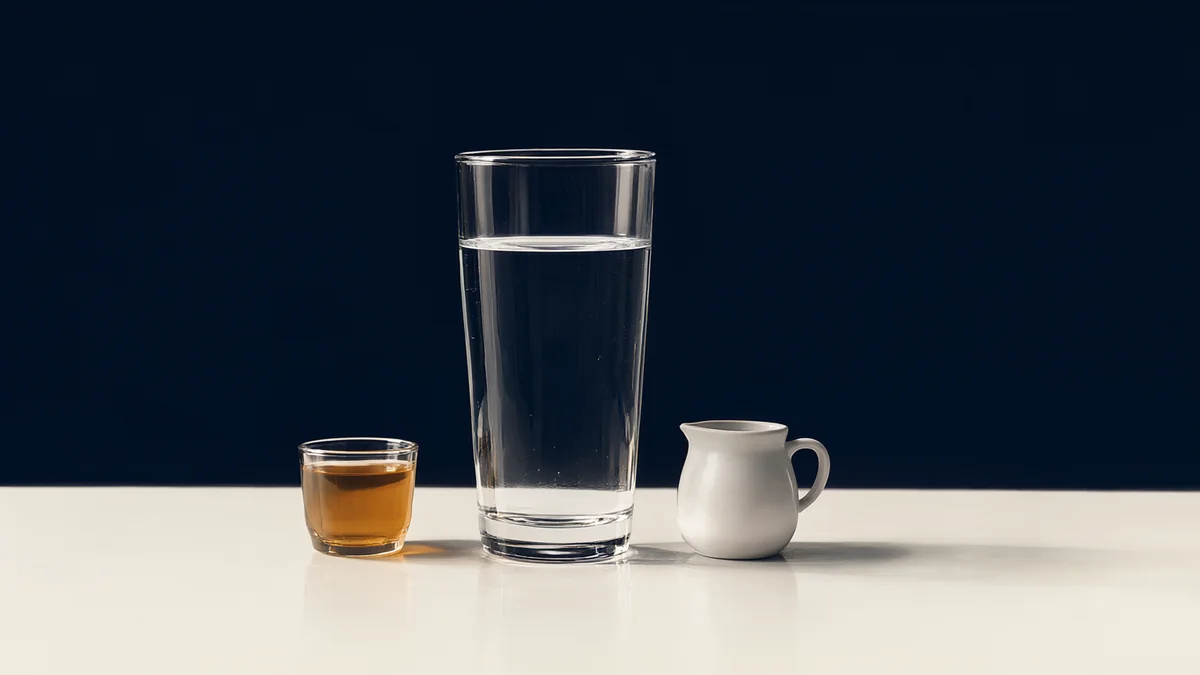
Drinks can be easy to overlook because they accompany other activities: a commute, a meeting, a meal or an evening routine. Looking at them is not a demand to drink only water. It is a chance to understand which beverages provide nourishment, which provide enjoyment, and which have become automatic purchases that you might prefer to change. The useful unit is your actual day, including refills and container sizes, rather than a list of universally permitted or forbidden drinks.
Map a usual day before choosing a replacement
Write down the drinks you usually have and when you have them. Include additions such as milk, syrups, sugar or cream, and whether one purchased container lasts for one or several occasions. This is a short planning exercise, not a requirement for permanent tracking.
Look for a recurring opportunity. If a sweetened drink appears at every work break, it may be easier to adjust than an occasional celebration. If a nourishing drink is one of the few things you can tolerate, removing it without a replacement could create another problem. The role matters as much as the calorie line.
Read the container and the serving together
The FDA serving-size explanation applies to drinks as well as foods. One bottle can contain more than one listed serving, and some labels provide both per-serving and per-container information. A café drink can also vary with size and additions.
For an illustrative example, a fictional drink listing 90 calories per serving would provide 180 label calories if the container holds two servings and you drink it all. The arithmetic is simple; the more useful decision is whether that drink fits the role you want it to play.
What beverage-replacement research actually found
The CHOICE randomized trial studied 318 adults with overweight or obesity over six months. Participants replaced caloric beverages with water or diet beverages, or received an attention-control approach. The corrected abstract reports no statistically significant differences in average weight loss between groups, though some analyses of achieving a weight-loss threshold favored replacement.
This supports modest, careful expectations. Beverage changes can be one manageable part of a plan, but the trial does not prove that water causes a predictable loss or that every person should buy diet drinks. Support, starting beverage intake and the comparator all shape the interpretation.
Distinguish free sugars from the word natural
Juice, honey and syrups can sound different from added table sugar, but the WHO dietary guidance includes sugars in fruit juices, honey and syrups within free sugars. A “natural” description does not mean the drink contributes no sugar or energy.
That is a reason to review the amount and frequency, not to attach guilt to having juice. Whole fruit and juice are different foods. If juice is a regular drink, consider whether another option fits the occasion, while keeping fruit or other nourishing foods available elsewhere in the day.
A nourishing drink may have a legitimate job
Milk, fortified alternatives and clinically recommended nutrition drinks may contribute nutrients or solve a practical intake problem. Their usefulness cannot be assessed solely by choosing the lowest-calorie option. Plant-based alternatives also differ; compare the information relevant to your needs rather than assuming every carton provides the same protein or fortification.
If you have low appetite, swallowing difficulties or another medical concern, ask the clinician or dietitian before replacing a drink that supports intake. The right question is what the change does to the overall pattern. A general weight-management tip should not quietly undermine a more specific nutrition plan.
Choose a replacement you would actually use
Consider taste, availability and routine. Water may be easy at home but unavailable during a long journey unless you carry it. Unsweetened tea may fit one person’s break; another may want a smaller version of the drink they already enjoy. The goal is a realistic option rather than an idealized recommendation.
You can change one feature at a time: size, frequency, sweetness or additions. Doing so helps identify whether the new choice is acceptable. There is no need to announce a permanent ban before learning whether the change fits your life.
Diet drinks require a separate evidence question
A low- or no-calorie beverage can reduce the energy in a specific replacement, but that does not establish every long-term health claim about sweeteners. Trials of beverage substitution and broad public-health recommendations may address different questions. Do not use one trial to promise benefits for all products, populations and outcomes.
If a diet drink helps you replace an habitual sweetened beverage, discuss its role within your overall plan when needed. Avoid claims that it either guarantees weight loss or automatically sabotages appetite. The evidence sentence should identify what was replaced, in whom, over what duration and with what accompanying support.
Review caffeine and alcohol for their own reasons
A drink review may uncover questions beyond energy: sleep timing, symptoms, medicine interactions or alcohol-related concerns. Those issues deserve appropriate advice rather than being reduced to a calorie comparison. A smaller alcoholic drink is not automatically a solution to unsafe use or a medicine interaction.
If your consumption is difficult to control or a change could involve dependence, seek professional support. This article does not provide alcohol-withdrawal advice. Likewise, persistent symptoms after caffeinated drinks deserve context; changing one beverage cannot diagnose the cause.
Keep the experiment proportionate
Choose one frequent drink, decide what role it serves, and try a realistic alternative when appropriate. Afterward, ask whether the change was convenient, affordable and enjoyable, and whether it affected the rest of eating. If you compensated by skipping nourishing meals, review the plan.
For the broader food pattern, see satisfying meals and a sustainable weight-management plan. Drinks deserve attention because they are part of that pattern. A useful change makes daily decisions easier; it does not require treating every beverage with calories as a mistake.
Keep additions visible in a café order
A coffee order can contain several separate choices: the cup size, milk, sweetener and toppings. If you want to understand the order, describe what you actually receive rather than treating the drink’s short name as a complete ingredient list. Ask for the relevant information when it is available, including which customization the displayed figure assumes.
Consider a familiar order you buy repeatedly. You might decide to keep it as an enjoyable part of the routine, change one addition or choose a different size. That is a decision about its role in your day. An occasional elaborate drink and a frequent default order raise different practical questions, and neither needs to become a judgment about your character or the rest of your eating.