Can strength training change what is lost during tirzepatide treatment, even when the scale shows much the same weight loss? A new randomized trial suggests it can. Adults who added supervised resistance exercise lost less lean soft tissue and gained strength, while those assigned to usual activities lost strength. Both groups lost about 22 kg over 40 weeks.
The T-REx study, published November 9 in Nature Medicine, offers a reason to look beyond kilograms. It does not show that training eliminated lean-tissue loss, or that every person using tirzepatide needs the same gym program.
Who took part, and what was compared?
Researchers in Western Australia studied 120 initially sedentary adults who started an intervention, after one of 121 randomized participants withdrew before treatment. Eligibility was ages 50–70, with obesity or overweight plus a weight-related condition. Participants were men and postmenopausal women; people with diabetes or cardiovascular disease were excluded. Half were women, and the average age was about 58.
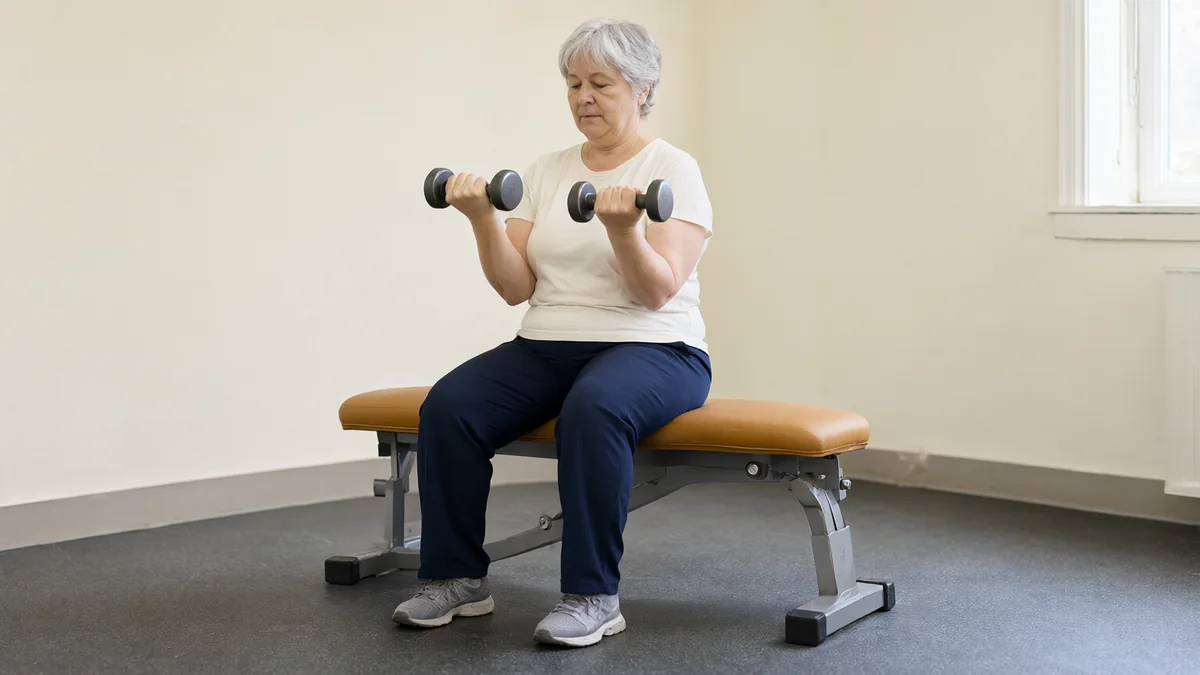
Everyone received tirzepatide. The randomized difference was three supervised, one-hour resistance-training sessions each week versus usual activities. Training progressed through planned phases, with accredited exercise physiologists adjusting effort and technique. Average session attendance was 91%.
The prospective trial registration, ACTRN12623001236684, confirms the 40-week comparison and the DXA lean- and fat-mass endpoints. Its public recruitment fields are older than the paper, so they should not be read as a current account of trial completion.
The research regimen started with weekly tirzepatide and gradual escalation toward 15 mg, with lower tolerated doses permitted. That describes the experiment, rather than instructions to start or increase medication. Our tirzepatide profile explains the drug context.
Similar weight loss, different strength results
The paper reports modeled weight changes of −22.61 kg with tirzepatide alone and −22.28 kg with added training. Fat loss was also similar. The important separation was in lean soft tissue: losses were 4.67 kg and 3.57 kg, respectively. Both groups therefore lost lean tissue.
The estimated between-group difference in lean-tissue change was 1.09 kg in favor of training. The main results and statistical methods give a 97.5% confidence interval of 0.43–1.75 kg, adjusted for the two co-primary outcomes. This is an average group difference, not a promised amount an individual can preserve.
Strength moved in opposite directions. Bench-press strength fell by about 4.1 kg without training and rose by about 4.7 kg with training. Lat-pulldown and knee-extension tests also favored the exercise group. These were secondary outcomes, measured as the maximum weight lifted once under a standardized protocol; they are not direct measurements of falls or independence.
The main analysis used repeated measurements and adjusted for age and sex. It included people who received at least one dose or exercise session, rather than only completers. However, its handling of missing measurements assumes that missingness can be explained by observed information. Our trial-reading guide explains why the analysis population and comparison matter.
Lean tissue is not a muscle-only measurement
DXA separates body composition into fat, lean soft tissue and bone mineral. Lean soft tissue includes muscle, but also water and other nonfat tissues. It is inaccurate to turn these results into “1.09 kg of muscle saved.” The study did not directly measure that amount of skeletal muscle.
The strength findings add something a scan cannot: participants became stronger despite continuing to lose lean tissue. That makes body composition and physical capability complementary outcomes. Our guide to fat, lean mass and muscle covers the measurement distinction.
What remains uncertain outside the research gym?
This was one center with close supervision, high attendance and a selected population. It cannot establish the same benefit in younger adults, people with diabetes or cardiovascular disease, or those following an unsupervised home routine. Strength assessors knew group assignments, although the DXA analyst was blinded.
There was no group receiving exercise without tirzepatide or a drug placebo. The randomized comparison supports adding this training program during treatment; it cannot isolate every effect of medication from weight loss itself. All participants were advised to maintain protein intake, but the study did not test a specific protein prescription.
Forty-week results also leave durability unresolved. The registry planned later follow-up, but a planned assessment is not a published finding. Whether these differences reduce frailty, falls or disability over years remains unanswered.
A useful question for a treatment visit
The practical discussion is whether a feasible, appropriately supported strength program belongs alongside weight management, and how progress beyond scale weight will be assessed. Our aerobic and resistance-training guide provides broader context. This trial does not supply a personalized exercise or medication plan.
Training does not remove drug risks. The current US Zepbound prescribing information includes weight management alongside diet and physical activity, while retaining contraindications and warnings. Gastrointestinal side effects remain common. This paper is evidence about an adjunct, not a new approval or permission to ignore safety restrictions.
The University of Western Australia sponsored the trial. Lilly supplied tirzepatide and reviewed the protocol. It also reviewed a draft manuscript for intellectual-property or new safety issues; investigators report no manuscript changes and no other Lilly role in trial conduct.