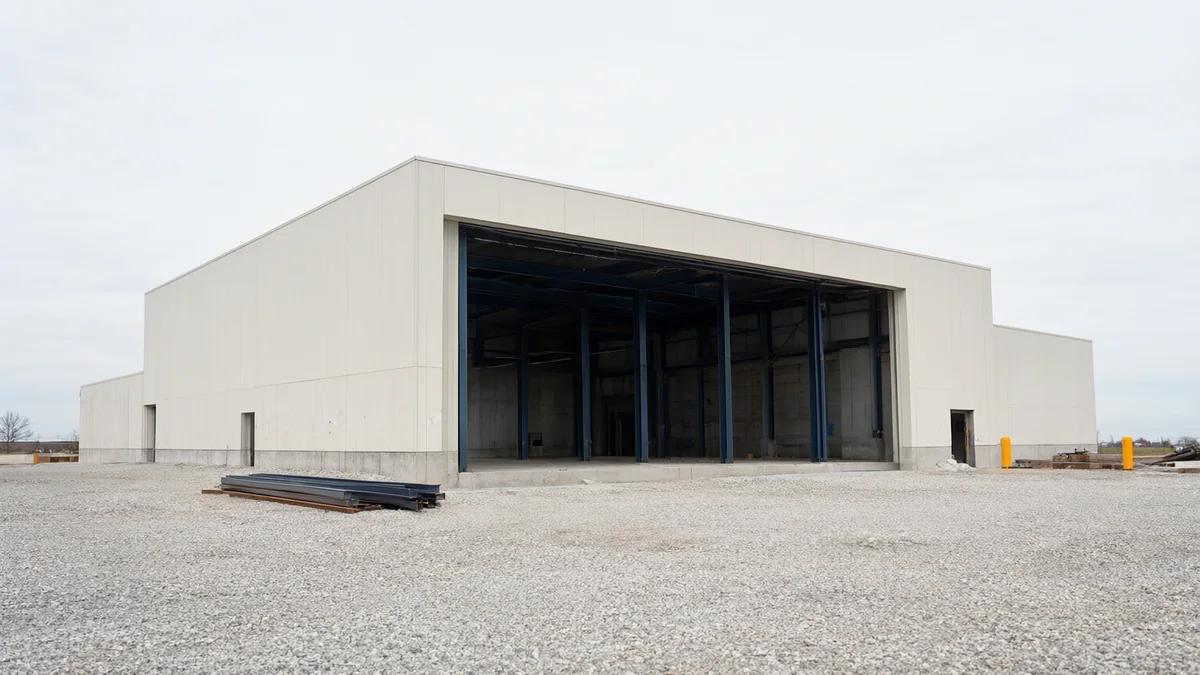
Lilly has begun building a $3.5 billion manufacturing facility in Pennsylvania’s Lehigh Valley, with retatrutide among the injectable medicines it plans to make there. The date most relevant to that announcement is 2031: Lilly expects the Fogelsville site to be operational by then. It is a target for a factory, not a promised launch date for the experimental weight-management medicine.
For readers following retatrutide, the November 12 announcement answers a supply-planning question. It does not establish when a prescription could be filled, what it would cost or who would qualify for coverage. Those questions require different evidence.
What Lilly actually announced
The company’s release, distributed through PRNewswire, describes a site intended to manufacture injectable medicines and devices. Retatrutide is named as one potential product; the release does not say the entire facility will be dedicated to it. The company expects 850 jobs and approximately 2,000 construction jobs.
These details come from Lilly, which has a commercial interest in the project. Its construction timetable and anticipated capacity are forward-looking plans. The release gives no annual retatrutide dose total, share of output reserved for individual markets or product-specific supply commitment that readers could use to estimate future pharmacy availability.
The Pennsylvania investment is therefore a concrete development in manufacturing preparation, rather than new evidence that retatrutide works better or is safer than an existing treatment. No new clinical results are reported in this announcement.
Four milestones that answer different questions
| Milestone | What it tells readers | What it does not establish |
|---|---|---|
| Groundbreaking | Lilly says construction has begun. | A functioning production line or medicine on sale. |
| Expected operation by 2031 | The company’s target for this particular site. | A confirmed retatrutide launch date. |
| Regulatory decision | Whether a regulator authorizes a specified medicine and use. | That every pharmacy has stock or every insurer covers it. |
| Patient access | Whether an authorized product can actually be prescribed, supplied and paid for in a particular setting. | Something this factory announcement has already secured. |
Reading these milestones separately avoids two opposite mistakes: assuming the investment means retatrutide is approved now, or assuming nobody could receive an approved product until this plant opens. The announcement supports neither conclusion.
Why 2031 is not a launch forecast
Lilly describes Pennsylvania as one of several sites in its broader US manufacturing expansion. That matters because a single building’s schedule cannot define the launch schedule of a medicine across a wider production network. The release does not identify which other facilities would supply retatrutide, in what quantities or on what dates.
Nor does a large capital commitment guarantee regulatory success. Lilly’s own cautionary statement says approval is uncertain. Building capacity while research and development continue is a business decision made under uncertainty; the spending itself cannot substitute for a regulator’s assessment of benefits, risks and manufacturing quality.
A useful update would need to connect an identified product to a specific authorization and a documented supply plan. Until those records exist, converting “operational by 2031” into either “available in 2031” or “unavailable until 2031” adds a claim the source does not make.
Clinical progress is a separate evidence track
The ClinicalTrials.gov record for TRIUMPH-1 lists a completed Phase 3 study of retatrutide versus placebo in adults with obesity or overweight without diabetes. This is a sponsor-submitted research record. Completion describes the study’s progress; it does not authorize prescribing or retail sales.
Our TRIUMPH-1 explainer examines the clinical findings, while the retatrutide profile provides broader development context. Keeping that evidence separate from the factory news prevents an investment headline from becoming an unsupported efficacy claim. The trial-reading guide explains what to check when a new clinical report appears.
What matters for access today
The FDA’s current notice about unapproved GLP-1 drugs states that retatrutide is not a component of an FDA-approved drug and cannot be used in compounding under federal law. Lilly also describes it as investigational in its November 12 release. Neither source supports treating an online vial advertised as retatrutide as an approved prescription product.
Our research-peptide safety guide explains why a research label or purity claim cannot establish clinical safety. This manufacturing announcement provides no reason to obtain an unapproved product or change a current treatment.
The next useful access updates would be an actual regulatory decision, confirmed commercial supply information and documented pricing or coverage terms. Each would answer a question the groundbreaking leaves open. For now, the news is a substantial investment in possible future production—with a site-specific 2031 target and no established retatrutide access date.