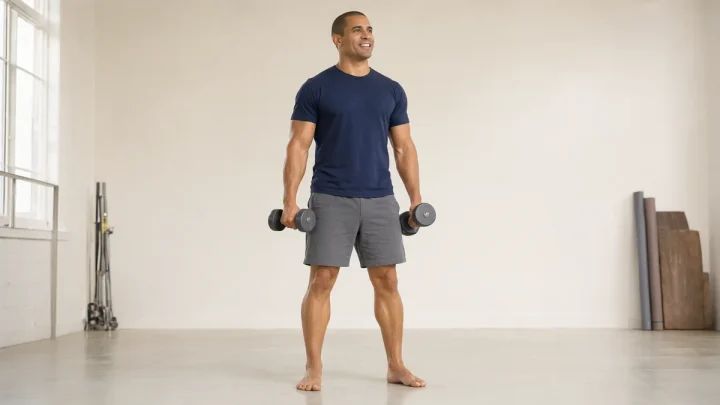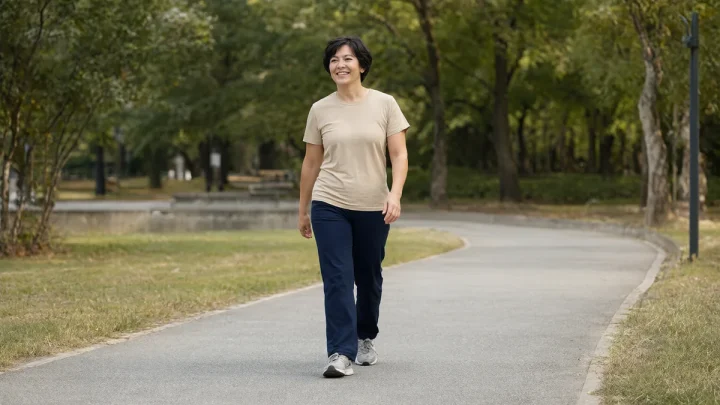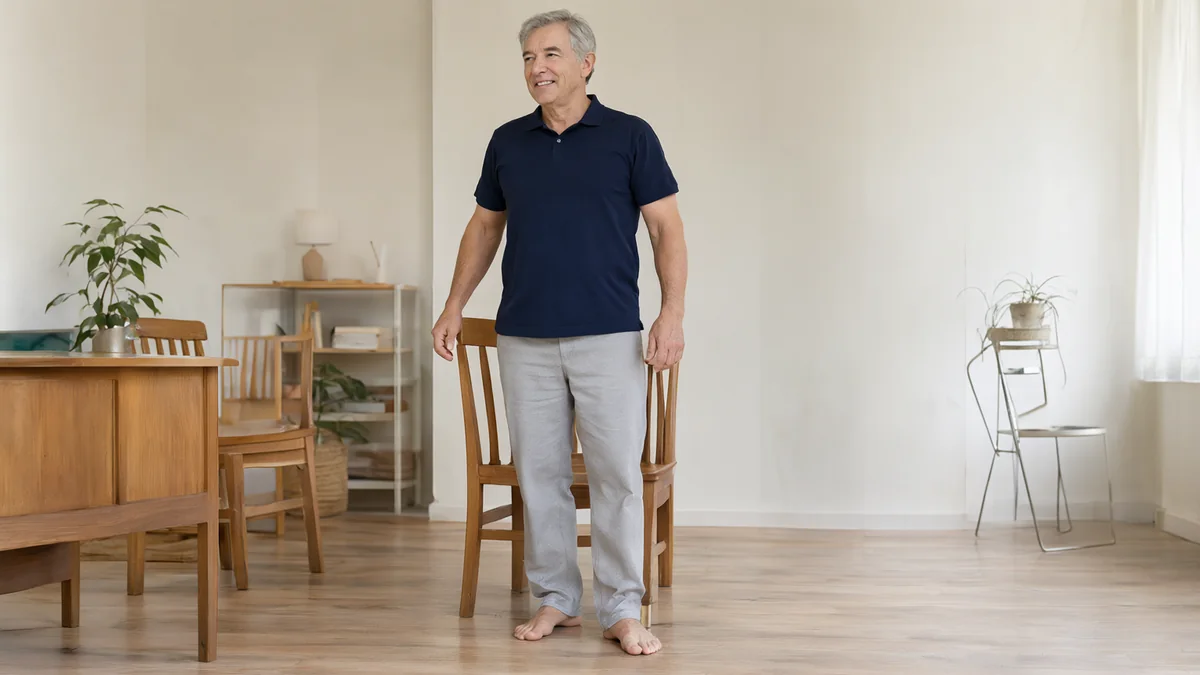
Staying active as you age is not only about walking farther. Standing from a chair, reaching safely, changing direction and carrying everyday objects may become just as important. An activity plan should make those abilities visible rather than treating them as incidental benefits of losing weight.
Strength, balance and mobility are related but different. A person can have good walking stamina and still need help with unsteadiness. Another person may be strong in a gym movement while finding an unfamiliar surface difficult. The useful plan begins with the tasks and risks that actually affect daily life.
Give each part of activity a role
CDC guidance for older adults includes aerobic activity, muscle strengthening and balance. It also recognizes the need to adapt activity to ability and health. This is a broad public-health framework, not a requirement to perform a particular online circuit. Older Adult Activity: An Overview
Aerobic activity can address sustained effort. Strength work challenges muscles against resistance. Balance practice addresses control in positions or movements. A complete plan may combine these elements, but the appropriate version depends on the person.
Do not assume that a long walk answers every balance question, or that using heavier weights automatically improves every daily task. Describe the activity’s intended job and choose a way to review that job.
A mobility trial offers useful but bounded evidence
The LIFE randomized trial compared a structured moderate activity program with health education in selected older adults at risk of mobility disability. The program included walking, strengthening and balance components and reduced major mobility disability over the follow-up period. Effect of structured physical activity on prevention of major mobility disability in older adults: the LIFE study randomized clinical trial
This supports the value of structured activity for the population studied. It does not identify which single component caused the result, prescribe a home exercise list for everyone, or establish safety for a person who was not eligible for the trial.
The study focused on mobility, not a promise of dramatic weight loss. That is another reason to keep function beside the scale when reviewing a weight-management plan.
Start with an everyday task inventory
Choose a few tasks that matter to you: rising from a familiar chair, carrying a light household object, moving through a doorway or reaching a destination. Note what is difficult rather than repeatedly testing yourself to the limit.
Possible descriptions include needing support, feeling uncertain on a surface, avoiding an activity after a fall or tiring before completing a task. These observations can help a clinician or physiotherapist identify what needs assessment.
The inventory is not a diagnostic test. It is a communication tool. Do not use a timed online challenge or the ability to perform one movement as proof that fall risk has been ruled out.
Bring falls and unsteadiness into care
A recent fall, repeated near-falls, worsening balance, dizziness or a new change in walking deserves medical attention. Medicines, vision, footwear, the environment and other factors may need review; exercise selection is only one part of the picture.
Do not attempt increasingly unstable movements alone to prove your balance. A specialist can help select suitable practice, supports and supervision. Stable equipment and a clear area matter, but they do not make every movement appropriate.
NIDDK advises consulting a health professional when moving or staying steady is difficult. That advice applies even if you have exercised for many years. Staying Active at Any Size
Sudden weakness, difficulty speaking, fainting or other acute concerning symptoms need urgent assessment. They should not be interpreted as a normal consequence of aging.
Make the setting easier to use
Access affects whether a plan happens. Consider transport, facility entrances, changing rooms, available seating and whether staff can adapt the activity. A class can be welcoming but still move too quickly for a particular participant.
At home, examine the area with the person guiding your program. Loose rugs, clutter, pets crossing the space and unstable furniture can change the practical risk. A chair used for support needs to be appropriate and secure.
If cost or travel is the limiting factor, ask about community services or a suitable home plan with instruction. The best setting is one that fits both the activity and the support you need.
Discuss strength without turning it into a body-size contest
Weight management in later life should consider function and nutritional adequacy. A lower scale number alone does not show that you are stronger or more capable. Lean mass, muscle size and strength are different measurements.
A trainer or rehabilitation professional can help select resistance movements and appropriate progression. The starting challenge should reflect current ability and any medical restrictions rather than a younger person’s routine.
There is no universal load, repetition target or protein intake in this guide. If unintended weight loss, poor appetite or increasing weakness is present, seek clinical advice instead of assuming a tougher routine will fix it.
Choose review measures that are meaningful
A useful review can ask whether an agreed task feels more manageable, whether participation is consistent and whether symptoms or falls have changed. Clinical assessments should be chosen and interpreted by the appropriate professional.
Keep comparisons fair. A different chair height, footwear, surface or amount of assistance can change a task. Record enough context to avoid treating every difference as progress or decline.
You can also record confidence and avoidance, but confidence is not a complete substitute for safety assessment. Feeling more willing to move is valuable; the activity still needs to fit your circumstances.
Plan for fluctuating weeks
Illness, caregiving and transport problems can disrupt activity. A suitable fallback may preserve some participation, while acute illness or concerning symptoms may require rest and care.
For a hypothetical example, someone attends a supervised class when transport is available and follows an individually agreed home activity on another day. The home version should be taught and reviewed; it is not simply the most challenging class movement done beside a chair.
See starting exercise after a break for a return process and tracking strength and stamina for outcome choices.
Keep independence connected to support
The goal is not to demonstrate that you never need help. Appropriate instruction, supervision and environmental adaptations can make meaningful activity possible. They are part of maintaining participation.
Bring the tasks you value, current symptoms, fall history and actual weekly constraints to the care conversation. A plan that considers strength, balance and sustained activity can support daily life while keeping the limits of general guidance clear.